Plotting the Zener Diode Characteristics and Finding Breakdown Voltage
- December 28, 2019
Aim
To draw the characteristic curve of a Zener diode and determine its reverse breakdown voltage.
Apparatus Required
A Zener diode, high-resistance rheostat, variable DC supply, voltmeter, multi-range ammeter, one-way key, a resistor, and connecting wires.
Theory
Zener Diode
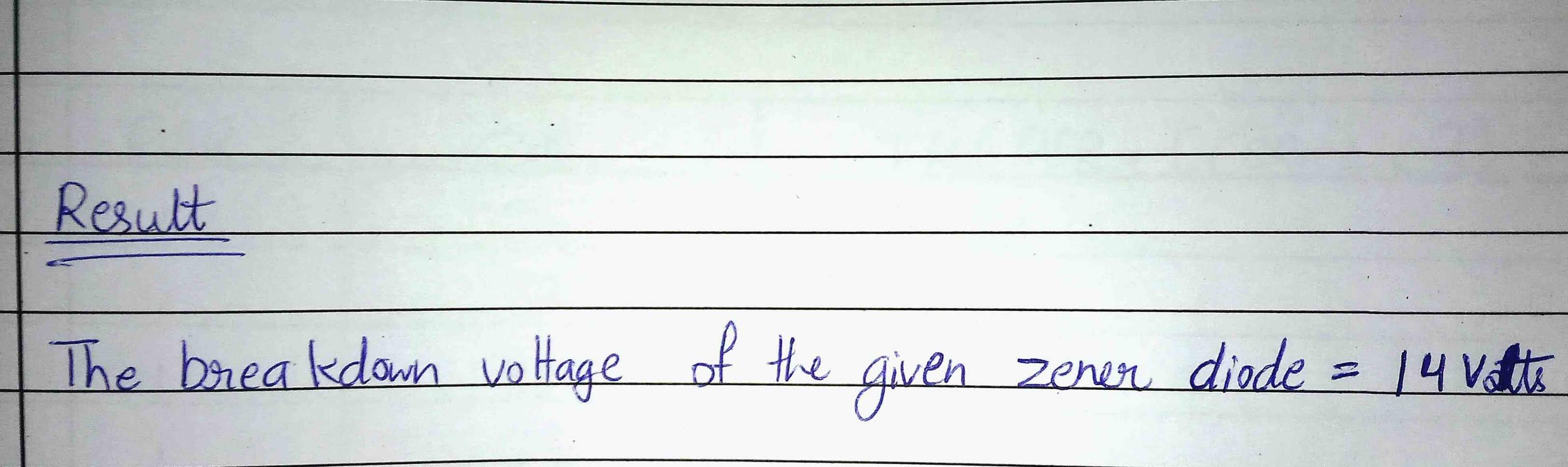
When a PN-junction diode is reverse-biased and the voltage increases, the reverse current remains very small until a specific voltage is reached. At this point, the current suddenly rises — this is called breakdown voltage.
A Zener diode is specially designed to operate safely in this breakdown region without damage.
The breakdown voltage in a Zener diode is known as the Zener voltage.
Procedure
- Note the type, number, breakdown voltage, maximum current, and wattage rating of the Zener diode.
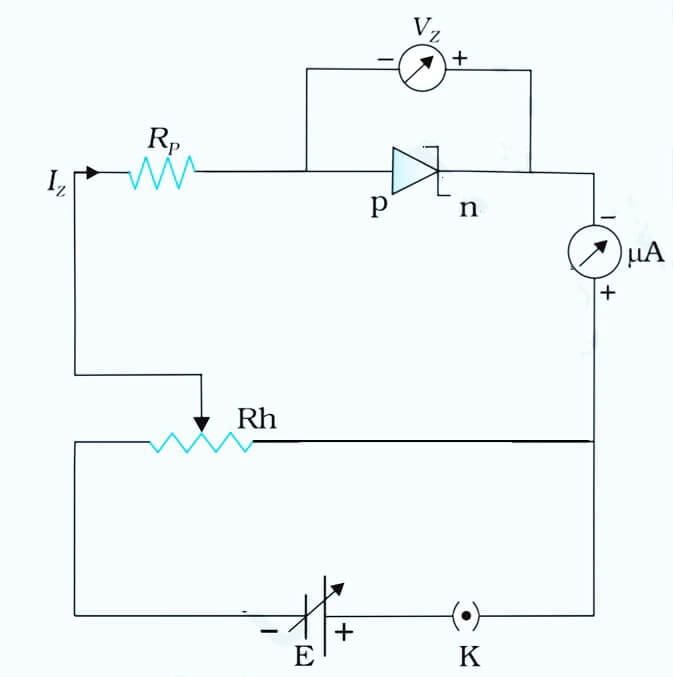
- Make the circuit connections as per the diagram. Ensure positive terminals of both voltmeter and ammeter connect to the positive terminal of the supply.
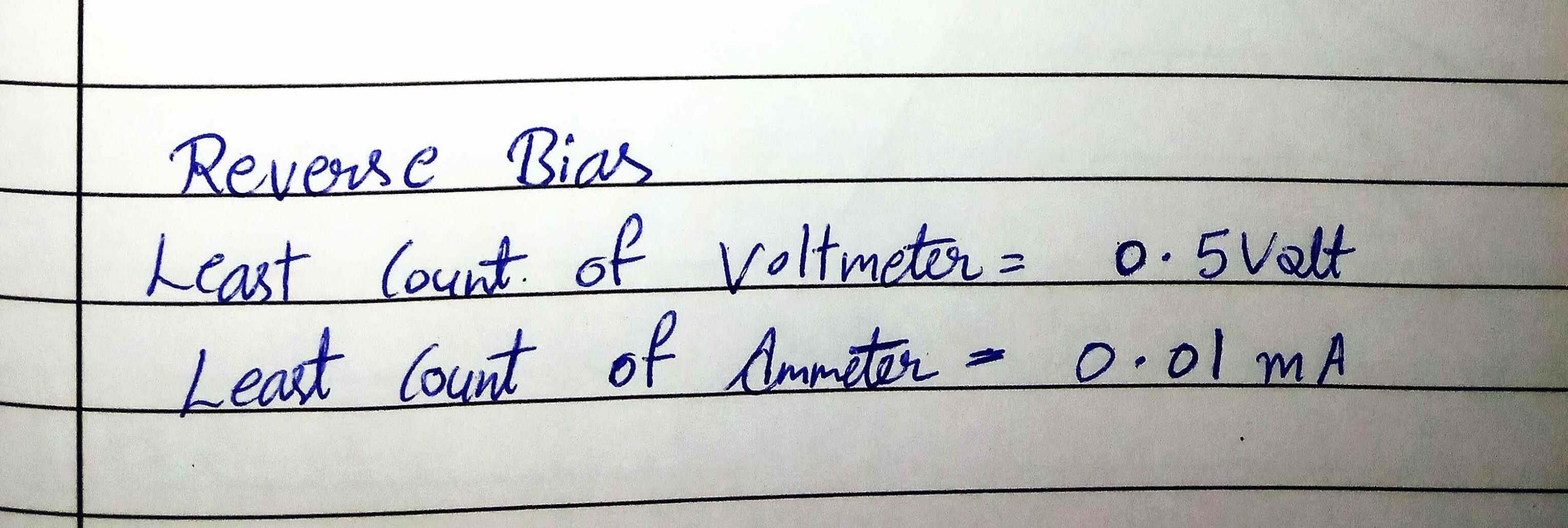
- Check the least count and zero error of the voltmeter and microammeter.
- Keep the rheostat at minimum resistance and insert the plug key to switch on the supply.
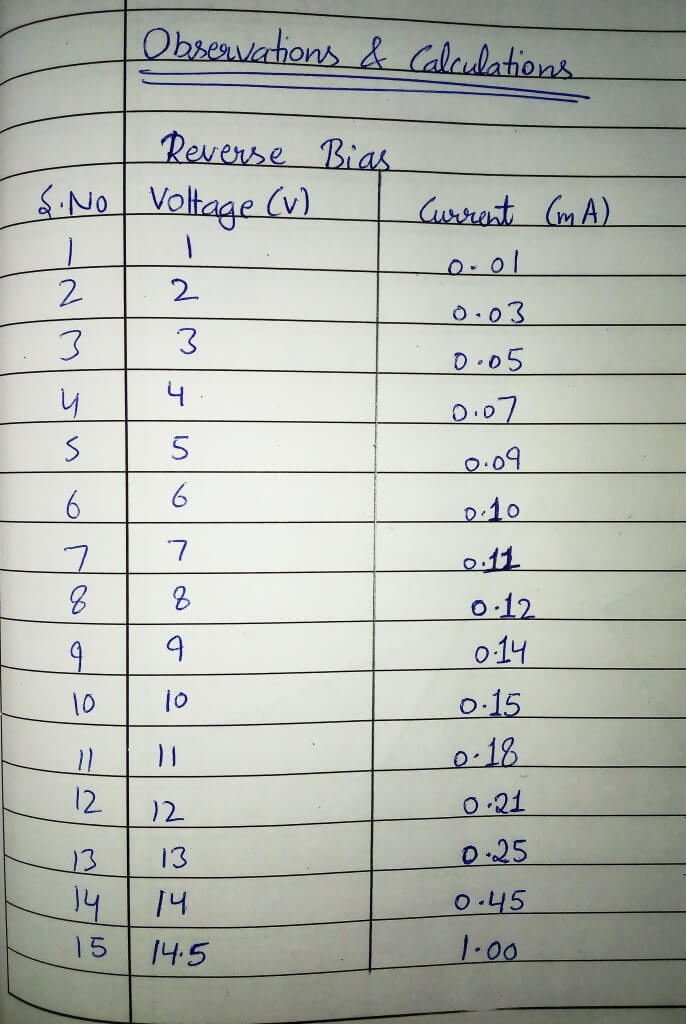
- Slowly increase the reverse voltage across the diode using the rheostat, taking small steps. Record corresponding voltage and current readings.
- At a specific voltage, the current will shoot up suddenly — this is the reverse breakdown voltage. Note this value.
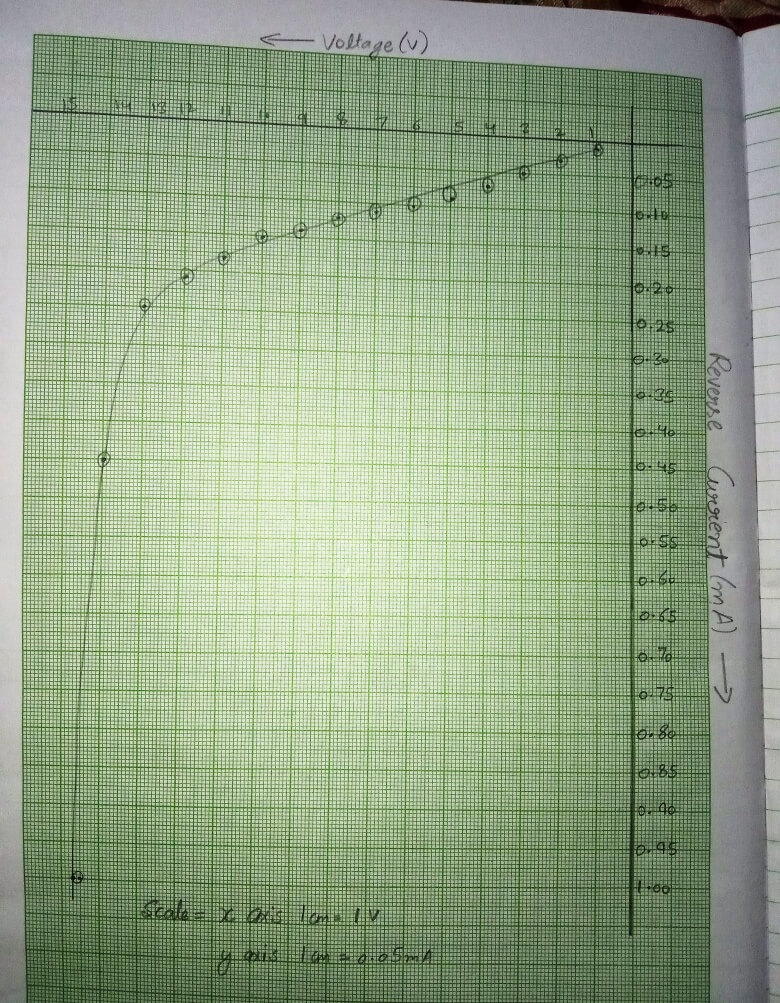
- Plot a graph with:
- Reverse voltage (V) on X-axis
- Current (I) on Y-axis
Circuit Setup Image
Observations
Precautions
- Clean the ends of connecting wires with sandpaper to ensure proper connections.
- Connect the negative terminal of the supply to the p-terminal and the positive to the n-terminal to maintain reverse-biasing.
- Increase the voltage gradually to avoid damaging the diode.
- The voltmeter must be connected in parallel and the ammeter in series with the diode.