Draw the Characteristic Curve of a p-n Junction Diode (Forward & Reverse Bias)
- December 28, 2019
Aim
To draw the characteristic curve of a p–n junction diode in forward and reverse bias.
Apparatus Required
A junction diode (IN 270 or IN 3065), milliammeter (0–500 mA), voltmeter (0–3 V), microammeter (0–100 μA), voltmeter (0–100 V), 5 V and 100 V DC supplies, rheostat, key, and connecting wires (or a diode characterization box).
Theory
Forward Biasing
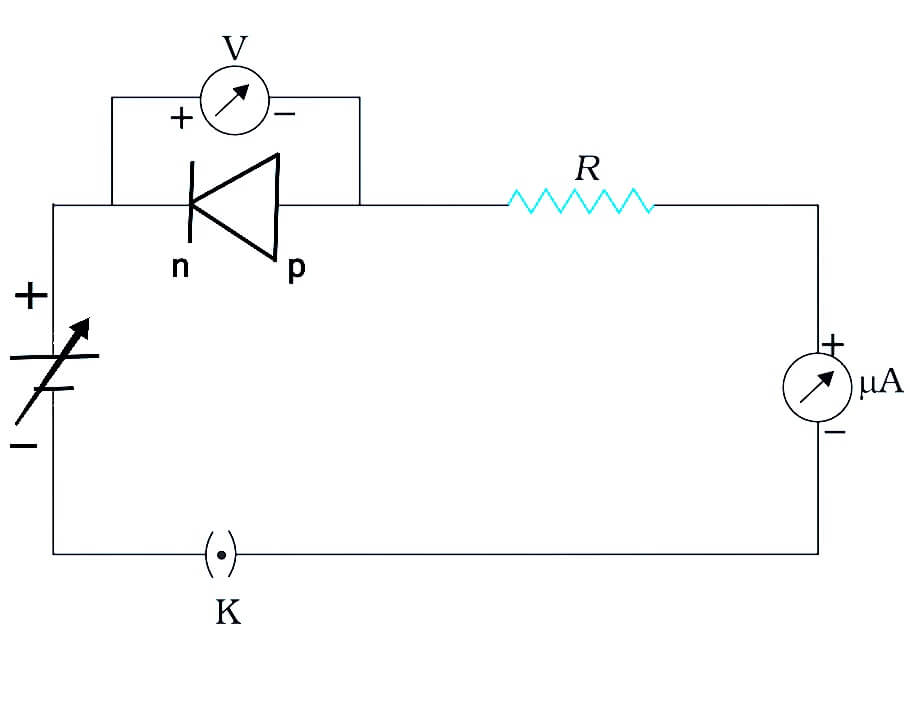
When the positive terminal of a battery is connected to the p-side and the negative terminal to the n-side of the diode, it becomes forward biased.
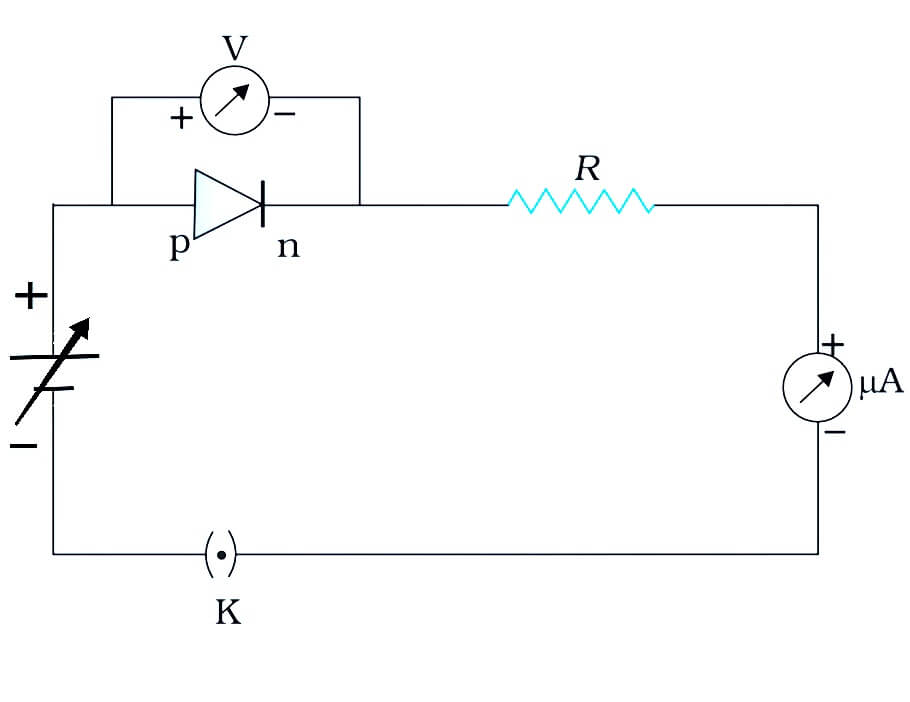
Reverse Biasing
When the positive terminal is connected to the n-side and the negative terminal to the p-side, the diode becomes reverse biased.
Procedure
A. Forward Bias Characteristics
- Connect the junction diode in forward bias using the standard circuit diagram.
- Set the rheostat such that the voltmeter initially reads 0 V.
- Increase the voltage in steps of 0.1 V.
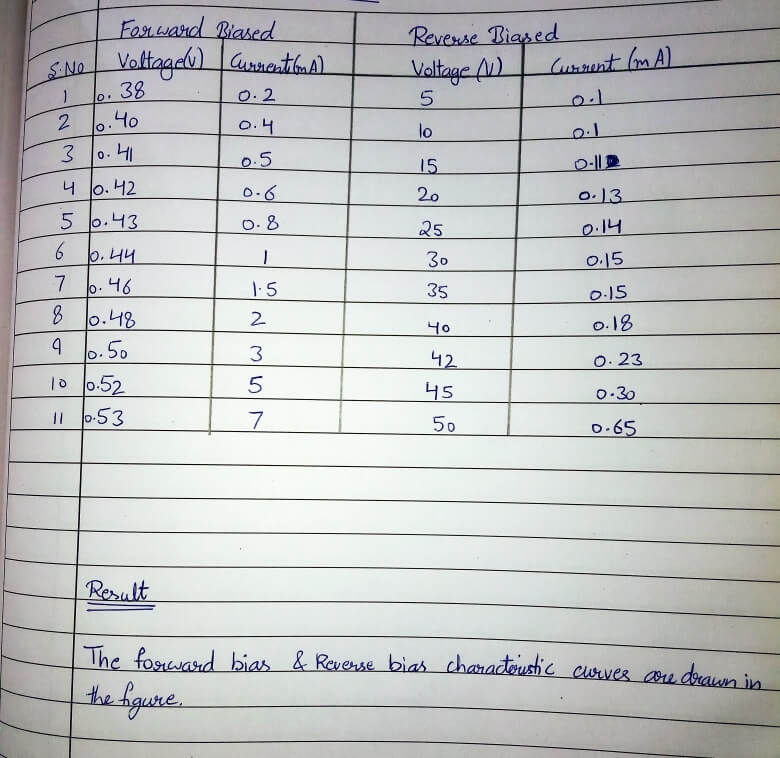
- Note the corresponding milliammeter readings and record them in the observation table.
B. Reverse Bias Characteristics
- Connect the diode in reverse bias using the appropriate circuit.
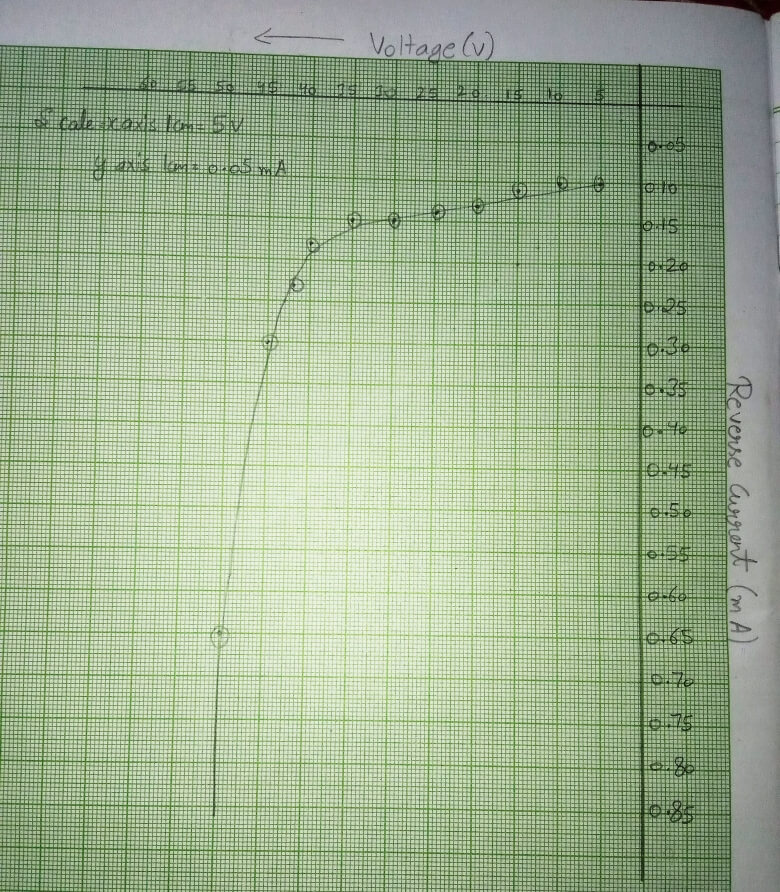
- Starting from 0 V, increase the reverse voltage in steps of 1 V.
- Record voltmeter and microammeter readings.
- Do not exceed the breakdown voltage to avoid damaging the diode.
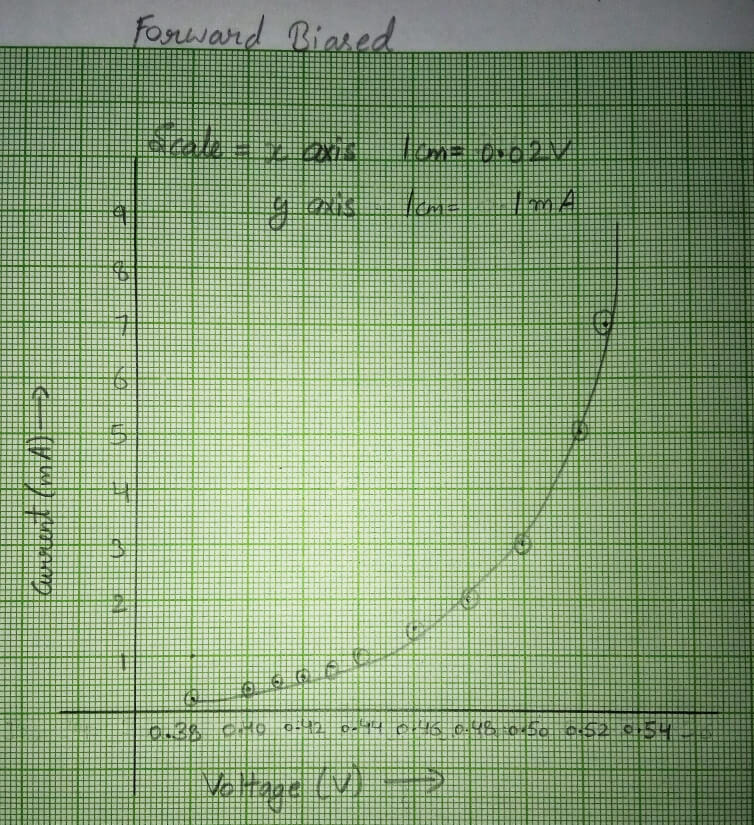
- Plot:
- Forward bias: Voltage (+X-axis) vs Current (+Y-axis)
- Reverse bias: Voltage (–X-axis) vs Current (–Y-axis)
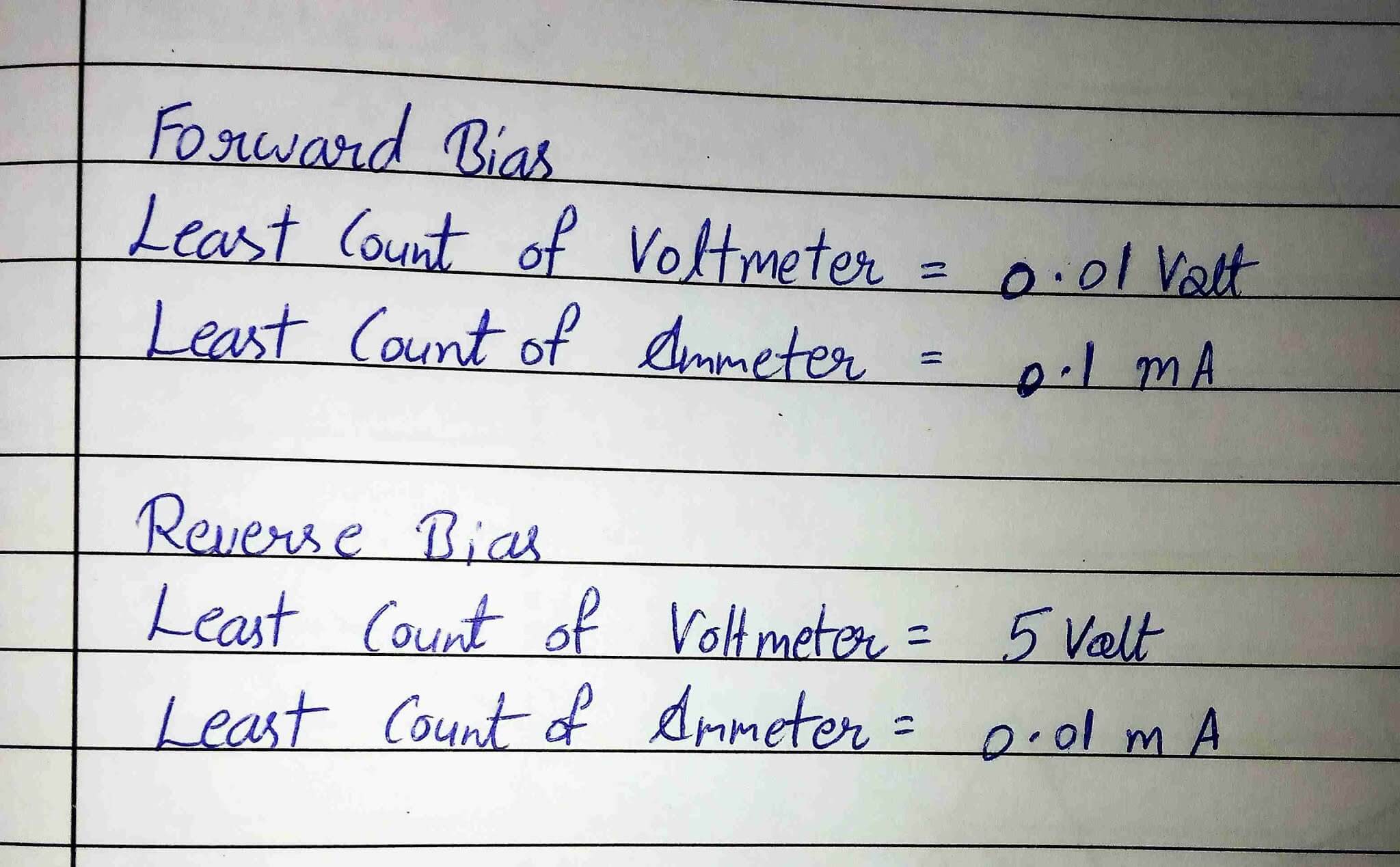
Observations & Calculations
Precautions
- In forward bias, ensure the rheostat is adjusted so the initial voltage is 0 V, then increase in 0.1 V steps.
- In reverse bias, begin at 0.5 V, then increase in 1 V steps.
- Do not allow the diode to reach breakdown unless instructed; it may permanently damage the device.