Measuring the Radius of Curvature Using a Spherometer
- January 1, 2020
🎯 Aim
To measure the radius of curvature of a given spherical convex surface using a spherometer.
🧰 Apparatus Required
- Spherometer
- Convex spherical surface
- Plane glass strip
- 15 cm scale
- Sharp-pointed pencil
📘 Theory (Explained Simply)
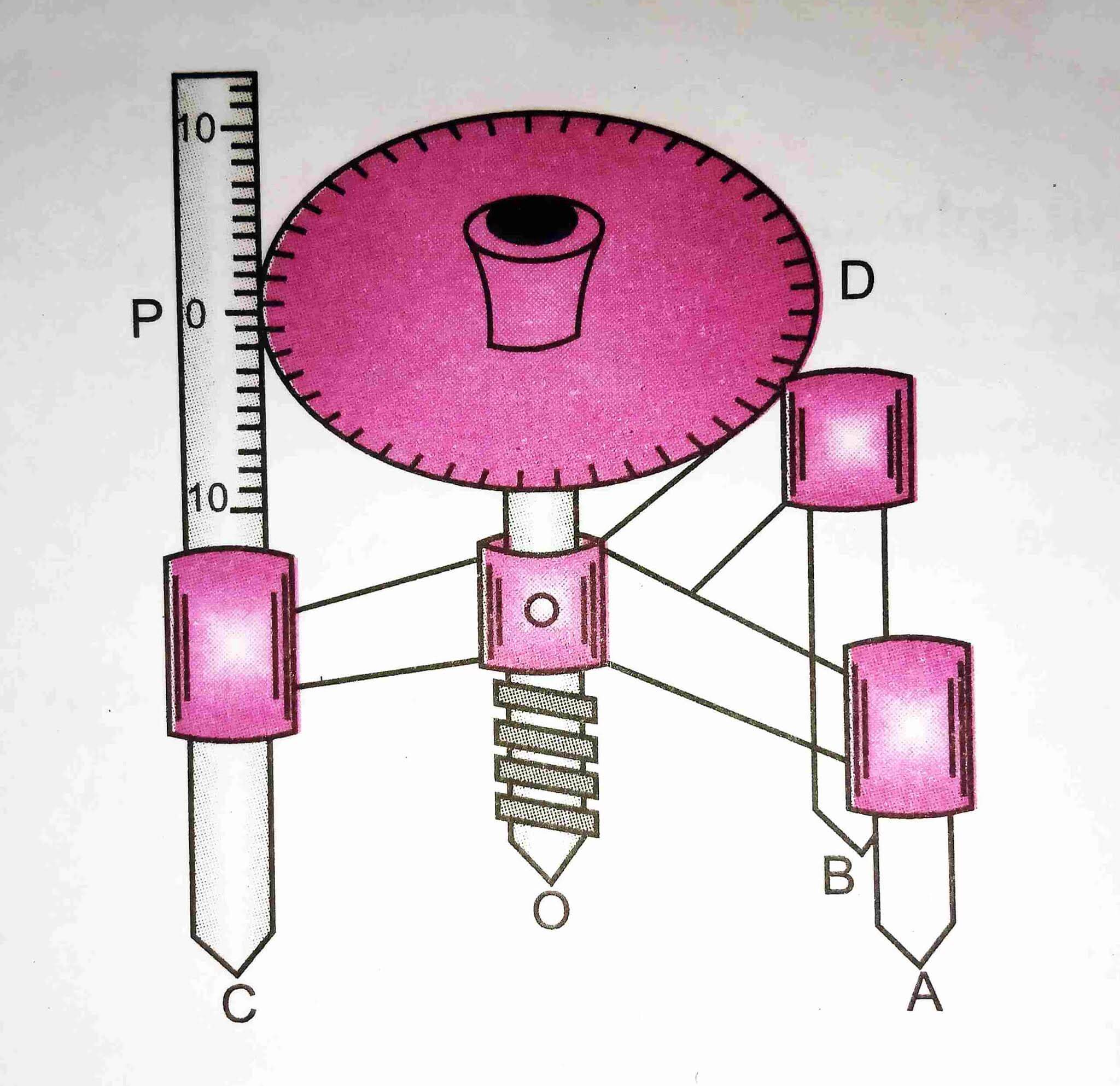
A spherometer works on the principle of a micrometer screw. It’s used to accurately measure very small heights (to the order of 0.001 cm) — for example, the height of the curved surface measured from the plane.
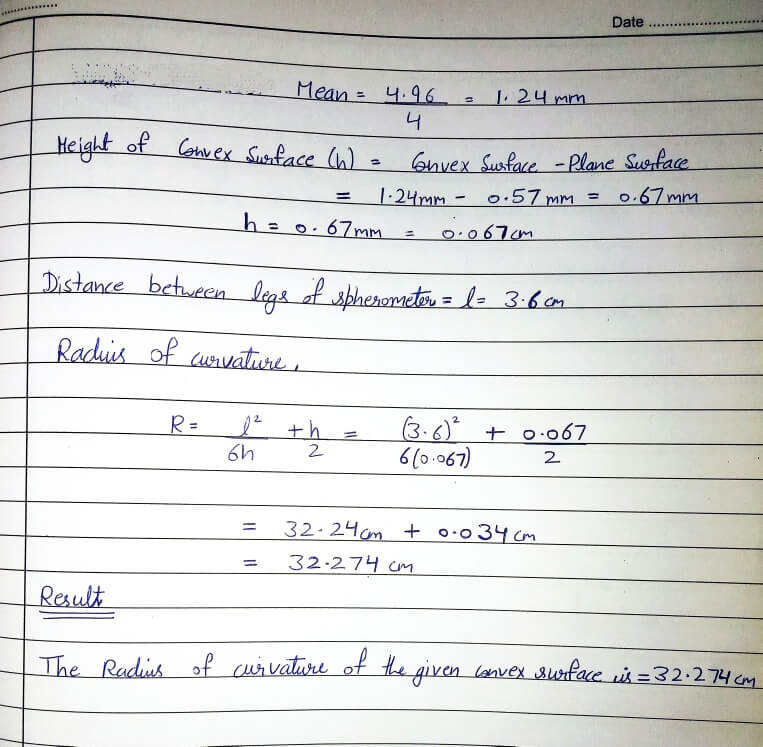
When the spherometer’s three outer legs sit on a reference surface and its central screw touches the curved surface, you can measure the height difference. From that height (h) and the known geometry of the legs (radius of the circle they form), you can calculate the radius of curvature (R) of the surface.
🧭 Procedure
- Raise the central screw and rest the spherometer gently on a flat white sheet (like a notebook). Mark the three contact points as A, B, C.
- Measure distances AB, BC, and AC to find the triangular base.
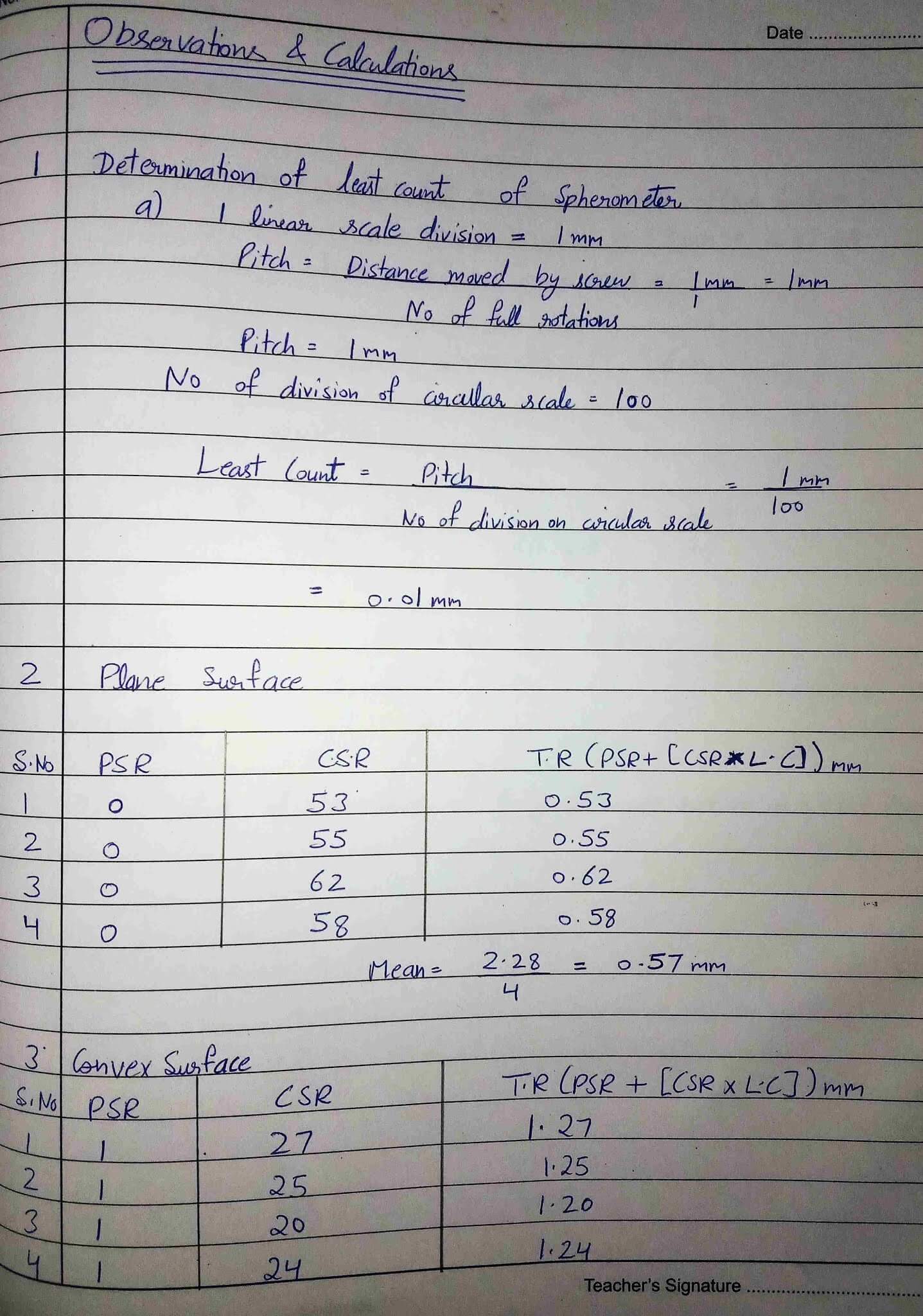
- Determine the pitch and least count of the spherometer’s screw.
- Raise the central screw, and place it on the convex surface.
- Carefully screw it downward until the tip just touches the surface.
- Note the reading on the circular scale aligned with the vertical scale.
- Take the spherometer away and place it on a large plane glass slab. Repeat the measurement (steps 5–6) at least two more times.
- Record all readings in a table.
📊 Observations
✔️ Precautions
- Ensure the screw moves freely without friction.
- Always rotate the screw in the same direction to avoid backlash error.
- Avoid excessive rotations — only turn until the screw tip just touches the surface.
- Make sure the central screw just touches, don’t apply too much force.
⚠️ Sources of Error
- Friction in the screw mechanism.
- Screw might be loose, introducing measurement error.
- Backlash error — if you rotate forward and back, accuracy drops.