Plotting L–T and L–T² Graphs Using a Simple Pendulum
- January 1, 2020
🎯 Aim
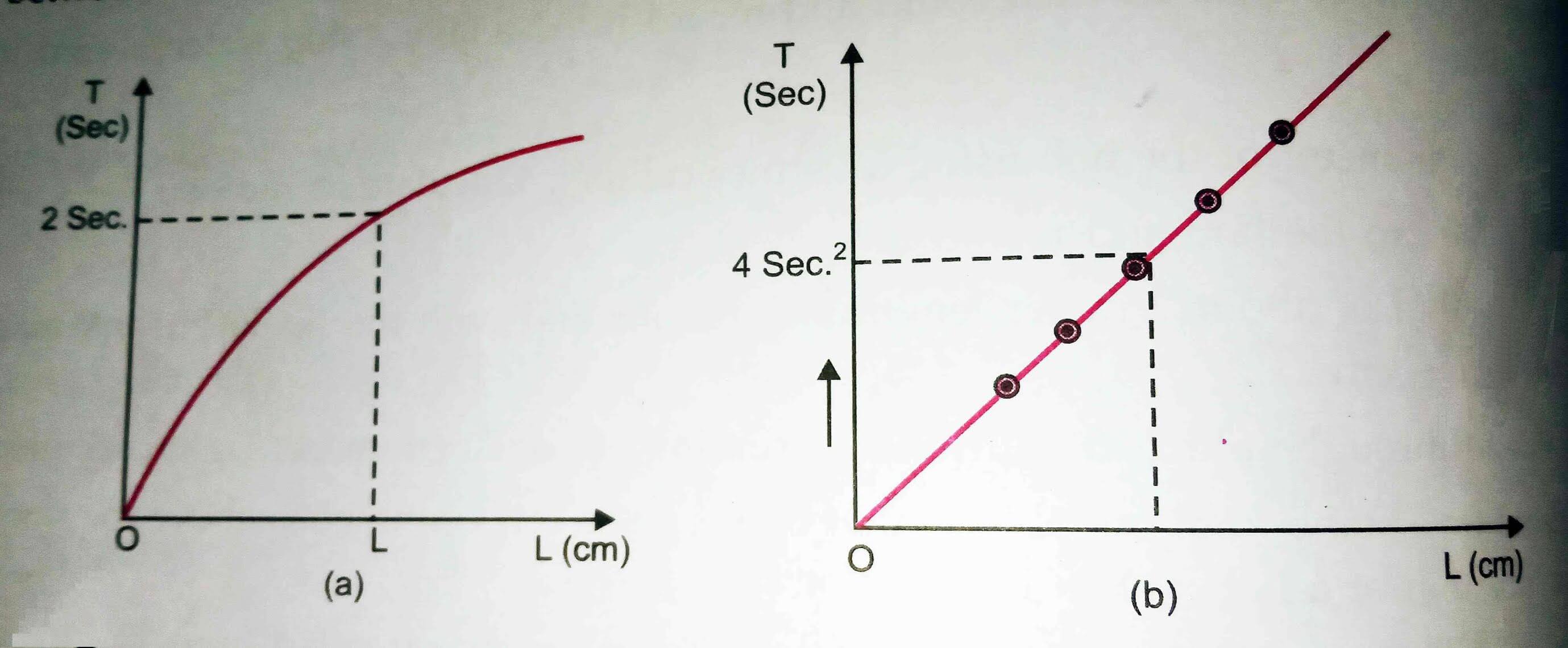
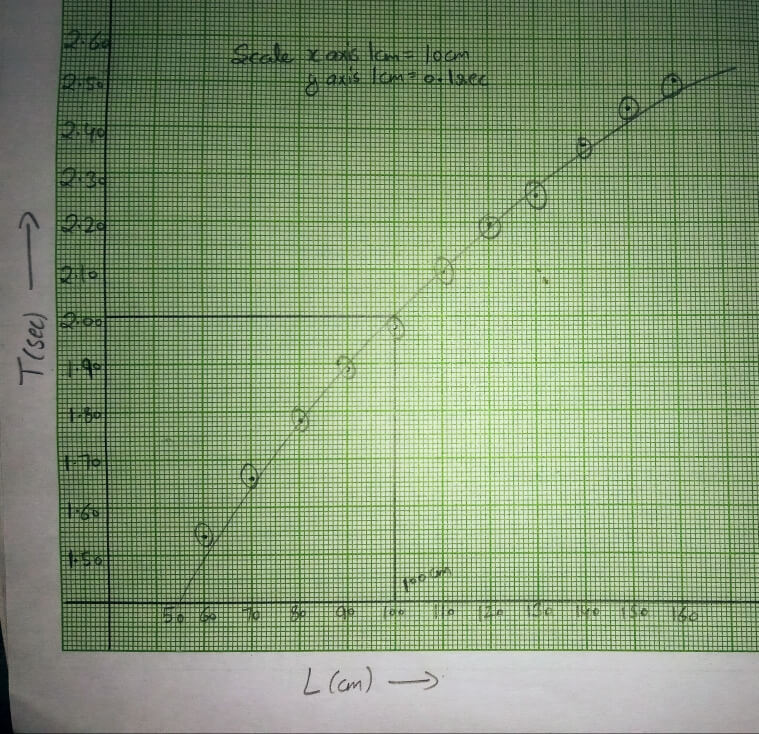
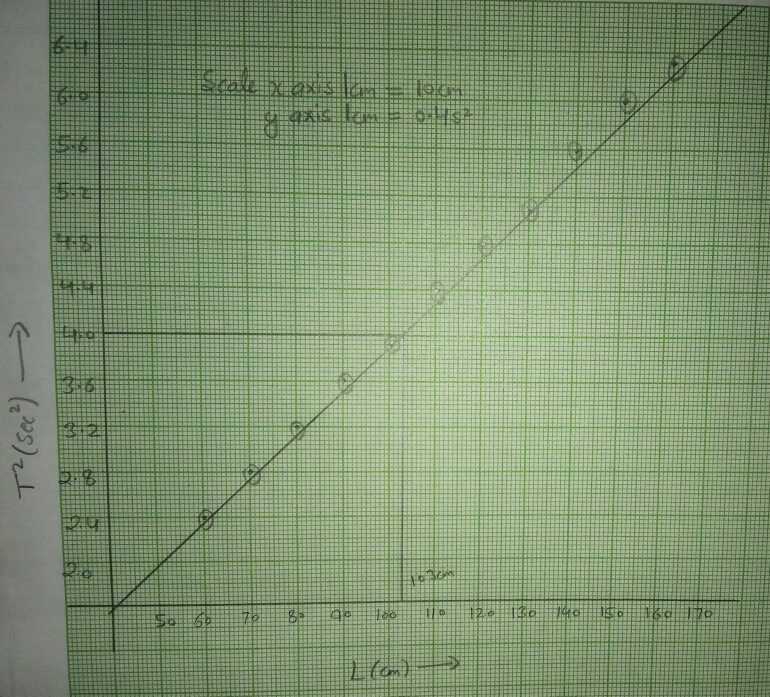
Using a simple pendulum, plot L–T and L–T² graphs. Then use the graphs to find the effective length of a second’s pendulum.
🧰 Apparatus Required
Metallic bob, Vernier calipers, stopwatch, thread, clamp stand, and meter rod.
📘 Theory (Made Simple)
A simple pendulum is just a small heavy bob hanging from a light, inextensible thread.
The time period of the pendulum is given by:
T² = (4π² L) / g
Where:
- L = effective length of the pendulum
- g = acceleration due to gravity
The effective length is:
L = l + h + r
Where:
- l = length of the string
- h = length of the hook
- r = radius of the bob
📷 Original Image Position
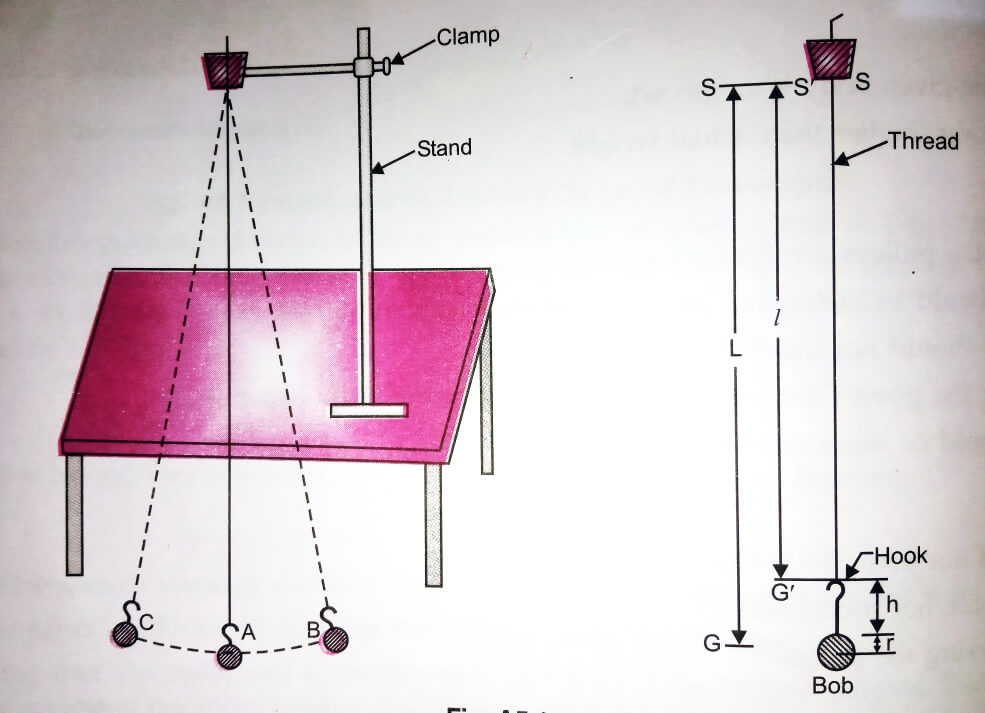
A pendulum with a time period of 2 seconds is known as a second’s pendulum.
🧭 Procedure
- Measure the least count of the Vernier calipers and stopwatch. Note any zero error.
- Measure the bob’s diameter using the Vernier. Calculate radius: r = d/2. Record hook length h as well.
- Take a 2-meter thread and mark lengths at 70 cm, 80 cm, 90 cm, 100 cm, etc.
- Pass the thread through the split cork so the 70 cm mark hangs below.
- Fix the clamp stand so that the bob is a few centimeters above the floor. Mark the rest position.
- Displace the bob slightly and release. Record the time for 20 oscillations.
- Repeat twice more for accuracy.
- Increase the thread to get an effective length of 80 cm.
- Repeat the observations.
- Continue increasing the length to 90, 100, 110 cm, etc., taking readings each time.
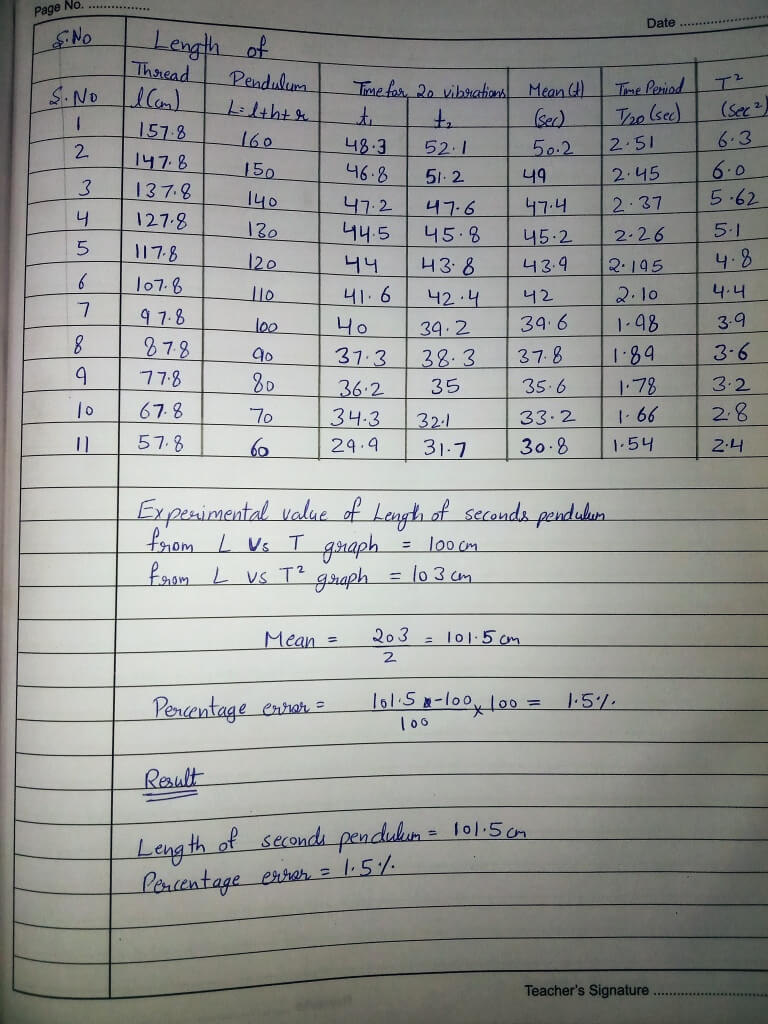
📊 Observations
✔️ Precautions
- Use a stopwatch with a small least count.
- Thread should be light and inextensible.
- Support must be rigid.
- Bob shouldn’t spin while oscillating.
- Keep amplitude small for accuracy.
⚠️ Sources of Error
- Suspension point may not be rigid.
- Amplitude might be too large.
- Bob may rotate.
- Human reaction time may affect stopwatch readings.
- Air currents may disturb the pendulum.