Measuring the Diameter of a Wire Using a Screw Gauge
- December 30, 2019
🎯 Aim
To measure the diameter of the given wire using a screw gauge.
🧰 Apparatus Required
- Screw gauge
- Wire whose diameter is to be measured
- Magnifying glass
📘 Theory
A screw gauge is a precision instrument used to measure very small lengths (up to 0.01 mm). It works on the principle of a micrometer screw, where rotational motion of the screw is converted into linear motion.
Linear Scale Reading (L.S.R.) = N x pitch
If the nth division of circular scale coincides with reference line, circular scale reading (C.S.R.) = n x Least Count (L.C.) in mm.
Total Reading (T.R.) = L.S.R. + C.S.R. = (N x pitch) + (n x L.C.)
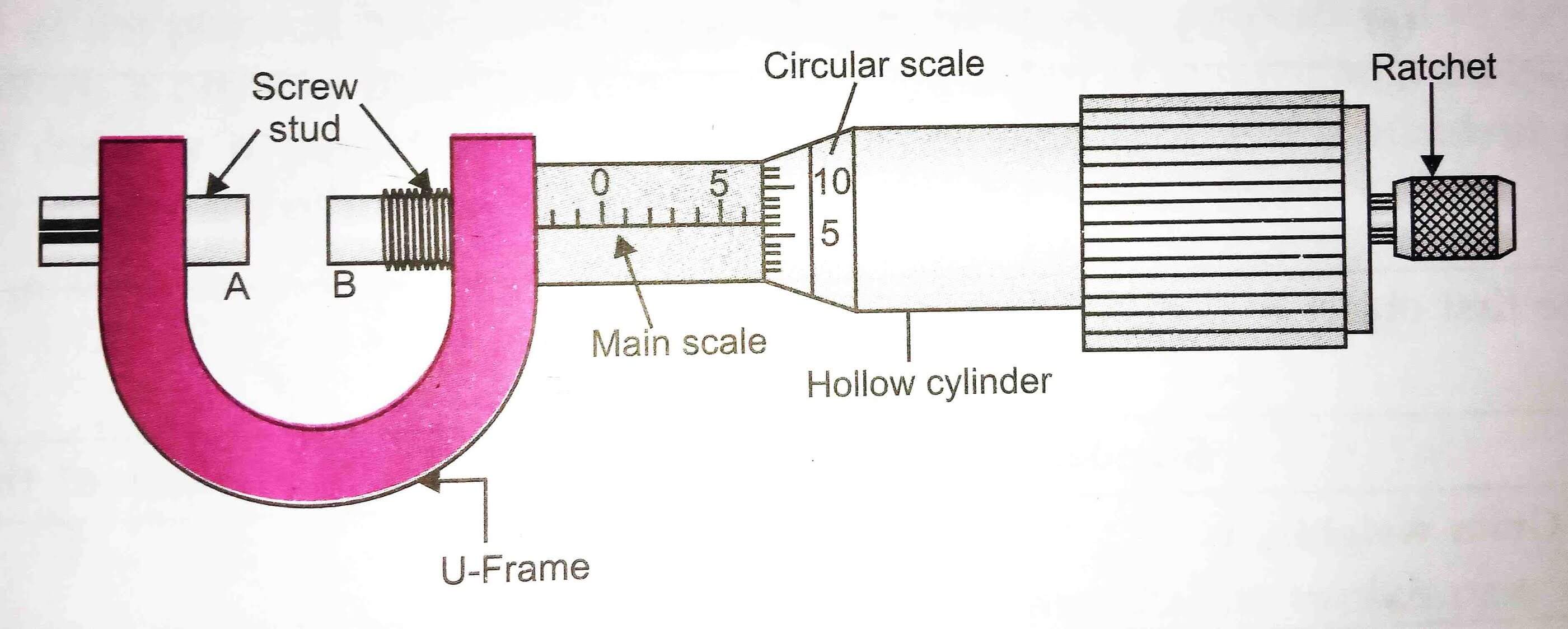
Example Screw Gauge Image
🧭 Procedure
Determine the pitch
Rotate the screw head five full turns and measure the distance moved.
Divide by 5 to get pitch.Find the least count
Least Count (L.C.) = Pitch / Number of divisions on circular scale.Find the zero error
Check whether the zero of the circular scale coincides with the reference line when the jaws just touch.Measure the diameter
- Place the wire between jaws A and B.
- Rotate the ratchet until it slips—this ensures correct pressure.
- Note the linear scale and circular scale readings.
Rotate the wire by 90°
Measure again to check uniformity of thickness. This completes one set.Repeat steps (4–5)
Take at least three sets of readings at different points along the wire.
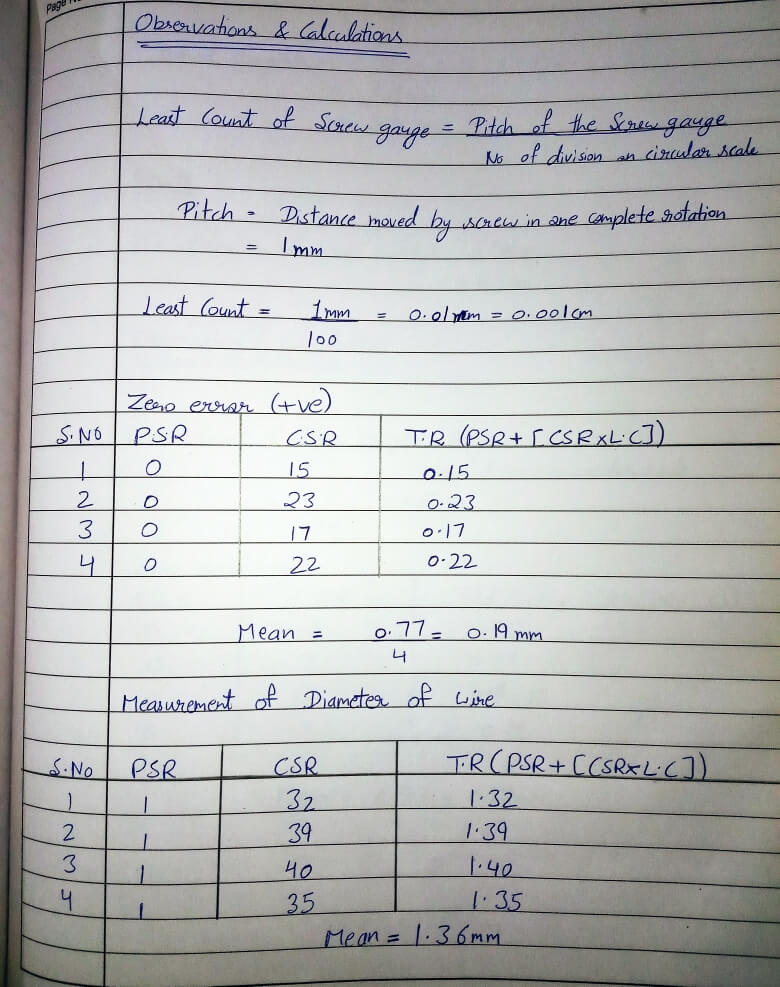
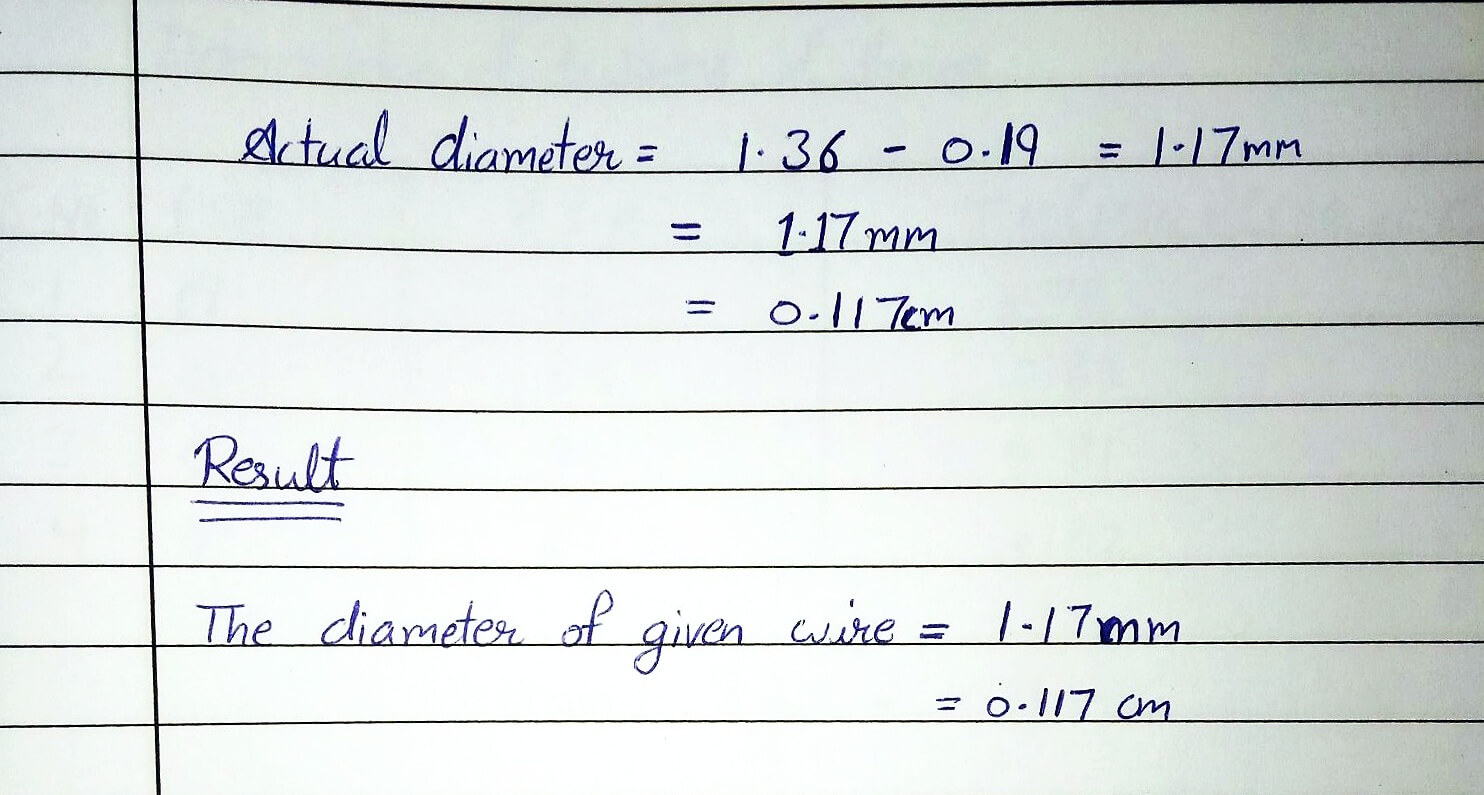
📊 Observations
✔️ Precautions
- Always rotate the screw using the ratchet to avoid excessive force.
- Move the screw in one direction to avoid backlash error.
- Take readings at different points of the wire.
- Avoid parallax error while noting scale readings.
⚠️ Sources of Error
- The screw gauge may have backlash error.
- The wire may not have a uniform diameter.
- Friction in the screw may affect accuracy.