Class 11 Physics Practical Coefficient of Friction Experiment Explained
- January 2, 2020
🧪 Aim
To find the coefficient of friction between a wooden block and a horizontal surface and to study how limiting friction varies with normal reaction.
📌 Materials Required
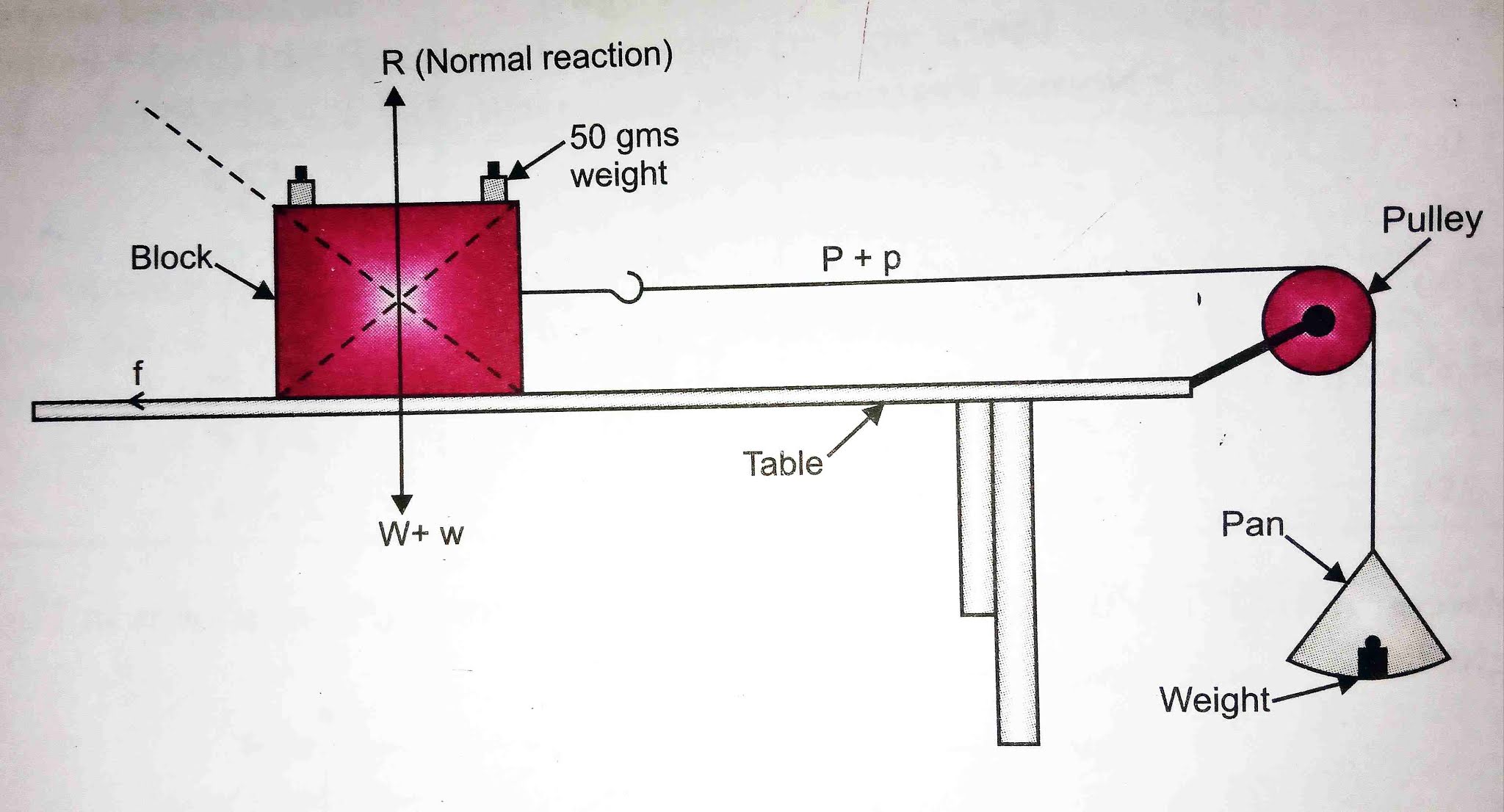
- Horizontal plane
- Wooden block with hook
- Spring balance (0–500 g)
- Frictionless pulley
- Fine thread
- Scale pan
- Spirit level
📘 Theory (Explained Simply)
Whenever two surfaces touch, friction tries to stop motion.
- Static friction: Opposes motion before the object starts moving
- Kinetic friction: Acts after motion starts and is usually smaller
- Limiting friction: Maximum static friction, just before the block moves
F1 = μ1N Where:
- μ1 = coefficient of friction
- F1 = limiting friction
- N = normal reaction
🧭 Procedure
- Place the horizontal plane on a table and level it using the spirit level.
- Tie one end of the thread to the hook on the wooden block.
- Pass the thread over the frictionless pulley and attach the scale pan to the other end.
- Add weights to the pan gradually.
- Lightly tap the table and note the weight at which the block just begins to move.
- Add a 50 g weight on the block and repeat.
- Perform at least five trials and record all observations.
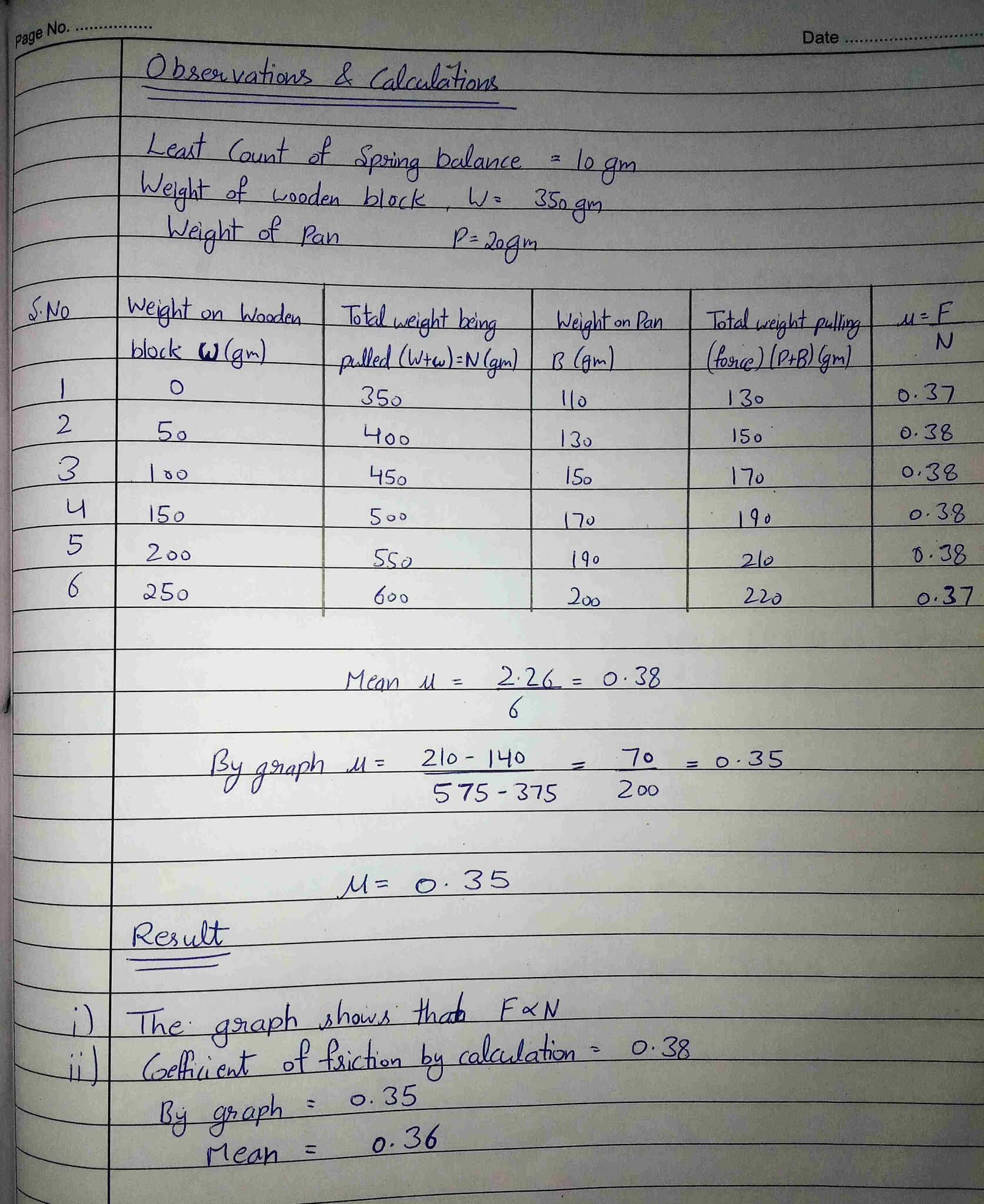
📝 Observations
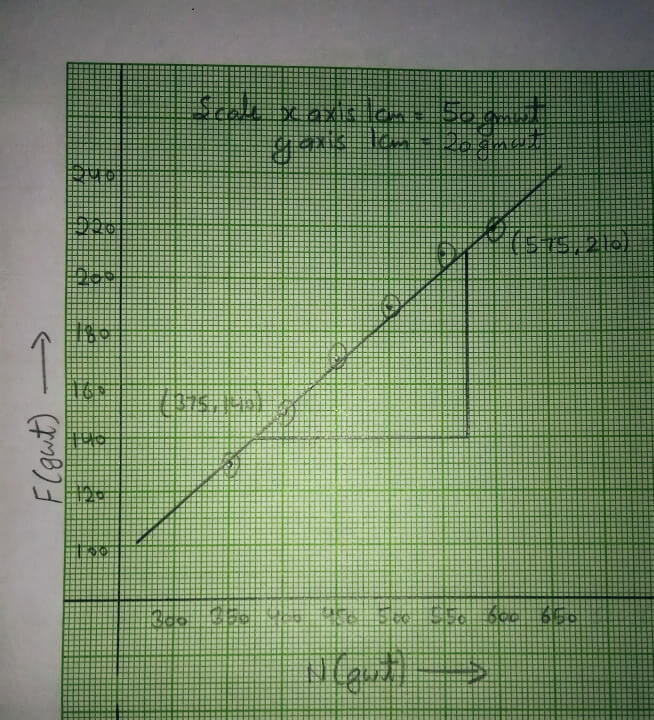
📊 Result
The coefficient of friction μ1 is obtained using:
μ1 = F1/N
(Average the values from all trials for accuracy.)
⚠️ Precautions
- Ensure the pulley is truly frictionless
- Keep the plane perfectly horizontal
- The thread should be straight, horizontal, and taut
- The scale pan should not touch the table or sway excessively
❗ Possible Errors
- Slight tilt in the table
- Friction present in the pulley
- Thread may sag or not remain horizontal
- Inconsistent tapping or adding weights too fast